
A monthly New York Times column on psychology called “Psych 101” recently discussed the best known of energy psychology’s tapping protocols – EFT – in a column entitled “What is tapping, and can it really improve mental health?”. To cut to the chase, the author concludes that “it’s not actually a psychological treatment”, it’s “pseudoscience” that’s backed by “lackluster evidence”, etc., etc.
In other words, it was a compendium of all the reflex responses and cherry-picked data that we’ve seen over the years from professional organizations that resist change. The main researcher cited – Dr. Cassandra Boness – recently published a similar article in an American Psychological Association (APA)-sanctioned journal as part of their efforts to prevent acceptance and accreditation for Energy Psychology in general and EFT in particular. She even went so far as to state that the practice of EFT may be “unethical” (shades of Wikipedia’s dismissal of EFT practitioners as “lunatic charlatans”!). A very detailed point-by-point rebuttal of that article, written by David Feinstein PhD, shows how completely groundless these charges are, and how well-established the research evidence is.
In response to the NYT’s hatchet job, several members of the professional society of energy psychology practitioners and researchers – the Association for Comprehensive Energy Psychology (ACEP) – wrote letters to the editor of the Times. None were published, but my attempt makes an important point (if I do say so myself!). Here it is:
I’m a Research Affiliate at Harvard Medical School and a retired psychiatrist, so I’ve been around the block. In the context of my longstanding interest in energy-based therapies like EFT (“tapping”), I’d like to offer this comment on Christina Caron’s recent Psych 101 article “What is tapping?” (6/20/25).
Each of the 200 published studies on EFT that she alludes to was peer-reviewed, meaning that one or two experts scrutinized those papers to offer constructive criticism, and these revisions then had to be approved by the journal’s Editor. In other words, about 500 researchers reviewed and approved these studies; the fact that the articles appeared in top flight journals can’t be dismissed by the sort of cherry-picking done by Ms. Caron.
For example, Church et al (2014) showed that PTSD symptoms in combat veterans were so diminished after only 6 sessions that 86% of the vets no longer met the diagnostic criteria for PTSD. These results held true at 6-month follow-up, and no other treatment has come close to this sort of impact.
A final point: the Editor of the Journal of Nervous and Mental Diseases, who saw fit to publish this study, was the former President of the American Psychiatric Association.
I’ll take his judgment over Ms. Caron’s.
Eric Leskowitz MD
Buckland MA
And so it goes with the paradigm shift and institutional resistance thereto. As appreciative as I am of the work of Feinstein and others who try to convince skeptics, I personally have shifted my focus away from answering the doubters to educating the curious. So I was gratified by this recent view of the magazine rack at a local Barnes and Nobles outlet:

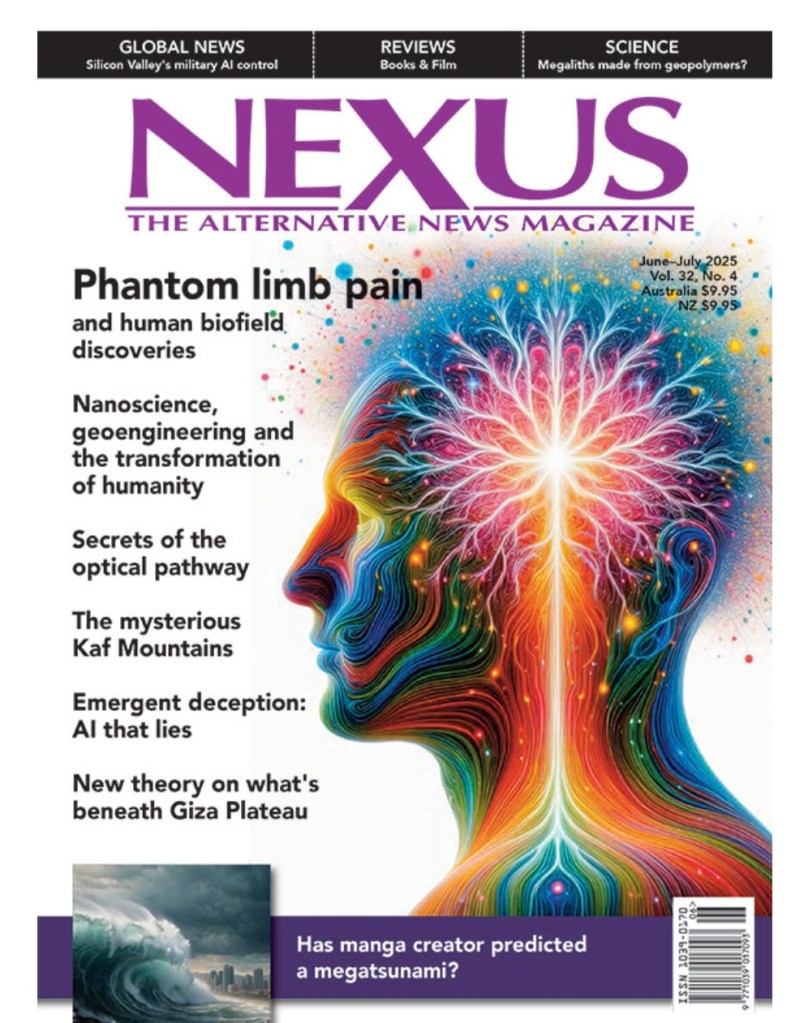
If you get out your magnifying glass, you’ll notice that the NEXUS cover story is about phantom limb pain, and is in fact an extract from my book.
Here’s the cover in all its glory:
And on a smaller scale, my local newspaper, The Greenfield Recorder, recently published a review of my book. Articles like these embody the sort of inclusive media coverage that allow readers to get a fuller picture of challenging issues like paradigm-busting new therapies. Maybe someday it’ll be the NY Times, but for now I’ll settle for NEXUS and The Recorder.


 The Mystery of Life Energy
Leave a comment